
Providing comfort to the government on the revenue front amid fiscal stress, direct tax collection is moving closer to the revised Budget target for 2021-21 and may get a further thrust from the last instalment of the advance tax payment, the deadline for which ended on Monday. The contraction in net direct tax collection narrowed to 5 per cent year-on-year as on March 15 compared to a 9 per cent decline seen in January. In absolute terms, net collection stood at Rs 8.2 trillion against Rs 8.67 trillion in the same period last year, according to the provisional numbers shared by a government official.

Glass shortage in China and the rising prices of imported glass used in finished solar panels have already hit the cost of solar panel imports. The cost of solar modules imported by India have increased 22 per cent since June last year. India imports close to 90 per cent of its solar cells and modules, of which nearly 80 per cent is from China. Domestic solar equipment makers import glass panels and are the largest suppliers in China. The price of a solar module glass has increased 150 per cent in the past six months, revealed industry estimates.

With the farmers' protest against the three new laws and in support of legalising the minimum support price (MSP) going strong, state governments have announced a slew of measures in their annual Budgets to placate farmers. The Centre kicked things off in the Union Budget by assuring farmers that the MSP would continue and coming out with a report card to demonstrate its commitment. However, these efforts don't seem to have yielded tangible results. In their respective Budgets, states chose to go a step further by announcing a variety of measures.

While the Constitution makes everyone in India eligible to work anywhere in the country, states have used legal loopholes to frame laws.
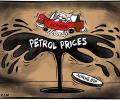
Many states are open to the idea of petrol and diesel being brought under the goods and services tax (GST) regime - contrary to the perception that they are averse to it - but they want a concrete proposal, including a compensation mechanism, from the Centre. West Bengal Finance Minister Amit Mitra says while the issue can be discussed, the Centre may not be keen to bring the change because it earns "much more" from taxes on petrol and diesel. "(The peak rate of) GST is 28 per cent. Under the regime, the Centre would only get 14 per cent. "So, definitely, the Union government does not want GST on fuel. It is all lies. Currently, they are in a very cozy place," Mitra said.

Foreign investment firms, especially private equity, are jittery about the Indian market as uncertainty continues to shroud the energy sector.
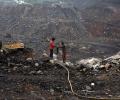
In order to keep the interest of new and small players intact, the coal ministry is offering only small- and medium-sized coal mines in the second round.
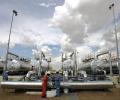
During a series of hectic talks between Cairn Energy and the Indian government over the $1.2-billion arbitration award in favour of the former last week, a slew of options was proposed by the two sides, including computation of capital gains and participation in the Vivad se Vishwas (VsV) dispute resolution scheme. The government is likely to go ahead and appeal against the arbitration award by a Permanent Court of Arbitration at The Hague before March 21, indicated finance ministry officials. Cairn Energy Plc on Sunday said it was hopeful that an acceptable solution to its tax dispute with the Indian government could be found to avoid prolonging and exacerbating the 'negative issue' for all parties.

Demoralising the private companies and disregarding their contribution won't do any good to the country or its youth as our experience has shown that private enterprises in mobile manufacturing has lead to every poor family owning a mobile phone now, while the country's private sector in the pharmaceutical space has been serving humanity through vaccines and medicines during Covid times, Modi said.

The number of centrally sponsored schemes have increased to 35 in FY22 from 30 in FY21 and central sector schemes have increased to 704 from 685 in the previous year, reports Dilasha Seth.

The Budget proposed abolishing the under-performing, authority of advance ruling, to replace it with a two-member board of advance ruling.

'It is just an excuse to say that the Centre has run out of money.' 'Pruning these schemes would mean hard time for the people of India.'

The survey showed that women workers fared worse than men when it came to employment recovery (53 per cent versus 57 per cent) and urban areas have been much worse hit despite a quicker bounce back.
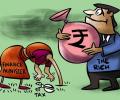
While the tax-to-GDP ratio of 9.88 per cent has been assumed for FY21, the same as last year, when it touched a decadal low, for FY22 a ratio of 10.7 per cent has been assumed, an average of the last five years.

'However, this time it looks like that is not working.'

The robust revenue collection reinforces hope of a good economic performance in the third quarter of financial year 2020-21 after the surprising pickup seen in Q2.

While the declarations under the scheme have to be filed by December 31, 2020, the government had in October extended the deadline for making payment by three months till March 31, 2021, in view of the ongoing Covid-19 pandemic.

Personal income tax saw contraction shrink to 13 per cent by November from 22 per cent seen up to September, on the back of lower issuance of refunds and improvement in economic conditions.

'We were among the first organisations to voice our opposition to the three Acts long before anyone else and had sent memorandums collected from 3,000 tehsils across the country to the agriculture ministry to amend the Bills, but nothing was accepted,' says BKS general secretary Badri Narayan Chaudhary.

During this time of the year, potatoes and vegetables come from Punjab and Haryana.
 © 2025 Rediff.com - Investor Information - Advertise with us - Disclaimer - Privacy Policy - Sitemap - Feedback - About us - Terms of use - Grievances